The Association
History
Forty-four years, from a return from Japan to the twenty-first National Men's Open.
Although the earliest evidence of martial arts goes back millennia, the true roots are difficult to reconstruct. Martial arts was evolved generally for self-defense, building physical strength and fitness and is a disciplined sports. It is synonymous to ‘Discipline’.
Martial art now, is being popular all around the world. The art was evolved with buddha religion so its intention was for self protection. Though it is said that martial arts was developed in China but the art is believed to be started from Nepal.
Hundreds of year back, in order to provide self protection from prevailing belligerent environment, Buddhist monks invented the Karate art, then was later evolved as Kungfu Martial Art in china. Then it was further evolved as Karate in Japan. However, the art wasnot legalised in Nepal.
Meanwhile, at that time, a person came to rise, Shihan Jagat Prasad Gauchan who went to Japan, got trained by the great Martial Art Kyokushin Karate founder, Masutatsu Oyama. Shihan Jagat Gauchan took 5 years training in Kyokushin Karate along with Kick-Boxing and Boxing. Then, he brought Martial Art into limelight in Nepal, analysing its importance in the nation.
The record
Milestones
- 2038
Return from Japan
Shihan Jagat Prasad Gauchan returns to Nepal after five years training in Kyokushin Karate along with Kick-Boxing and Boxing under Sosai Masutatsu Oyama.
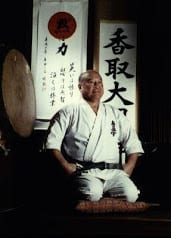
Sosai Masutatsu Oyama - 2039
The Association is founded
Kyokushin Karate Do Association is established at Dasharath Rangasala — the first martial art training legalised for the general public in Nepal.
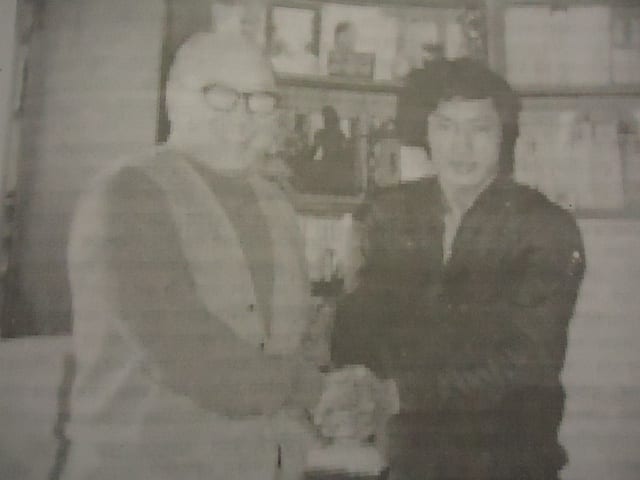
Caption and date required — content review. - 1982
Gold in Singapore
Nepal contests the 1st Asian Full Contact Karate tournament in Singapore and secures 1st position. Shihan Gauchan takes the gold medal — the first Asian Championship gold in Nepali sport.
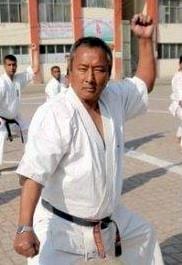
Shihan Jagat Prasad Gauchan - 1983
The Third World Championship, Tokyo
Jagat Prashad Gauchan and Udaya Gauchan contest the Third World Kyokushin Full Contact Karate Championship in Tokyo. Jagat Prashad reaches the 4th round.
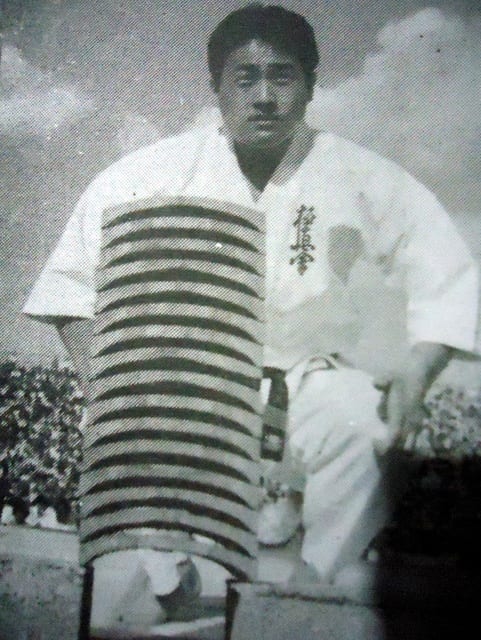
Sosai Masutatsu Oyama Content review requiredFounderpage.aspx records this result as “pre quater final” while international.aspx records “4th round”. Confirm which is correct.
- 2040
The first National Men's Open
The First National Mens Open Full Contact Tournament is held in Kathmandu. Ramji Prashad Bajracharya takes first place.
- 2051
The 6th Asian Karate Championship, Kathmandu
Per the printed Nepali caption carried on the Association's own archival photographs, the 6th Asian Karate Championship is held in Kathmandu.
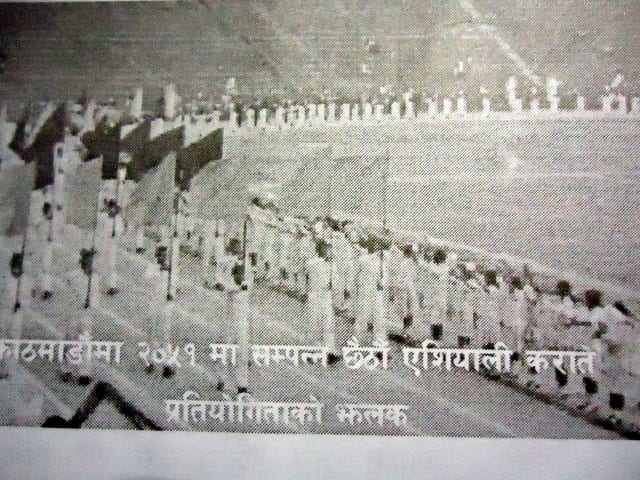
६ठौं एसियाली कराते प्रतियोगिता, काठमाडौं, २०५१6th Asian Karate Championship, Kathmandu, 20512051 B.S. Content review requiredThe archival captions describe the 6th Asian championship in Kathmandu, while Founderpage.aspx describes the 5th Asian in Sri Lanka. Both may be true; confirm the sequence before publishing.
Gold in Sri Lanka
In the 5th Asian Full Contact Karate tournament held in Srilanka, Nepal secures 1st position. Rupesh Dangol takes the gold medal.
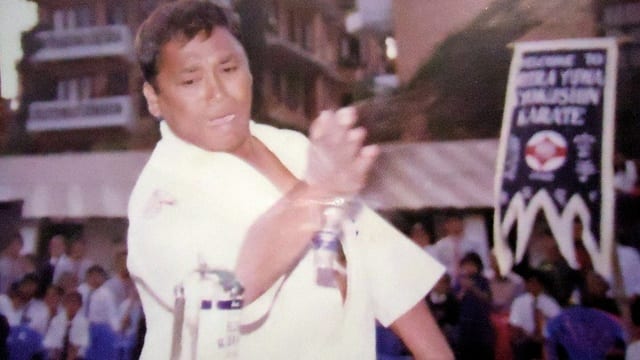
Caption and date required — content review. Content review requireddefault.aspx dates this gold to 1992 A.D.; Founderpage.aspx dates it to 1994. The year is withheld until the Association confirms it.
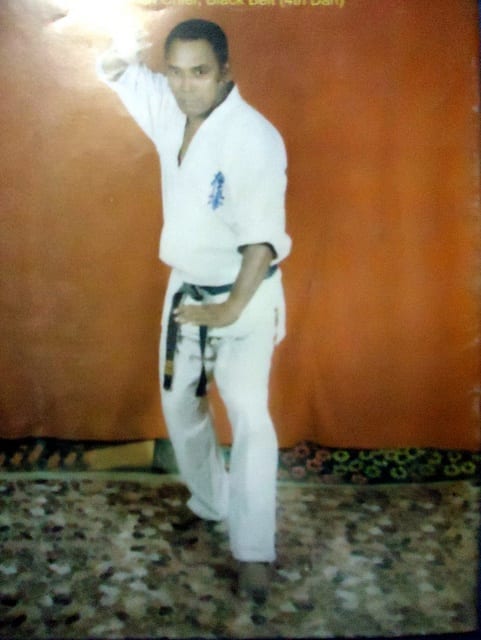
Bajra is introduced
Shihan Jagat Prasad Gauchan introduces a new form of martial art, Bajra, founded on the principle One Punch Knock Out. All its rules and disciplines were introduced under his direction.
Caption and date required — content review. - 2080
The Twenty-first National Men's Open
The Twenty-first National Mens Open Full Contact Tournament is held in Kathmandu. Binaya Singh takes first place, and holds the Bajra Mens Grand Championship for the season.
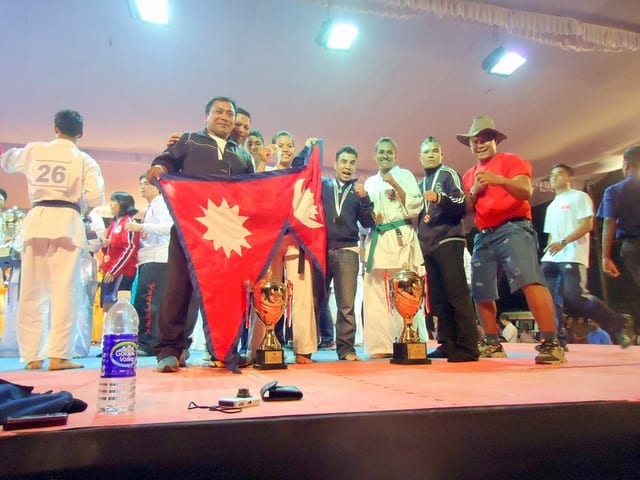
Caption and date required — content review.


Legacy
The father of martial art in Nepal
Shihan Jagat Prasad Gauchan is known as the father of martial art in nepal and has been one of the best trainer as well as figher in the world, who gave birth to more than 50,000 fighters in Martial Arts since establishment. Through this sport, Shihan Jagat Prasad Gauchan has gained his fame at national as well as international level.
One of the honourable character of Shihan Jagat Gauchan is his patriotism and love towards the motherland. Though he could have gained fame and money in Japan, but he didnt stay in japan, realising the need for the development of Martial Art in nepal. He came with an aim to introduce Nepal to the outerworld through Martial Art and he became successful in his aim too. He was the first martial artist, who won the first gold medal in the Asian Championship and increased the pride of the nation.
Considering the need for change in Martial Art with the requirement in accordance to time, Shihan Jagat Prasad Gauchan introduced a new form of martial art ‘Bajra’ with the principle of ‘One Punch Knock Out’. ‘Bajra’ is considered as a wonderful gift of the maha guru Shihan Jagat Prasad Gauchan in the world by all the martial art students. All the rules and disciplines of ‘Bajra’ were introduced under the strict directions and guildlines of Shihan Jagat Prasad Gauchan.
Content review required“Gave birth to more than 50,000 fighters” and “won over 14 gold medals” are the Association's own figures. Both are significant claims and should be confirmed and dated before being set at display scale.
Content review required“Nepal hold second position in 8th SAAF game” — the competition name (SAAF / SAFF / SAG) and the year are not given on the source page, so the claim is carried in its original wording and not expanded.

Begin
The training session that has run since 2039 B.S. still starts at half past six in the morning.